
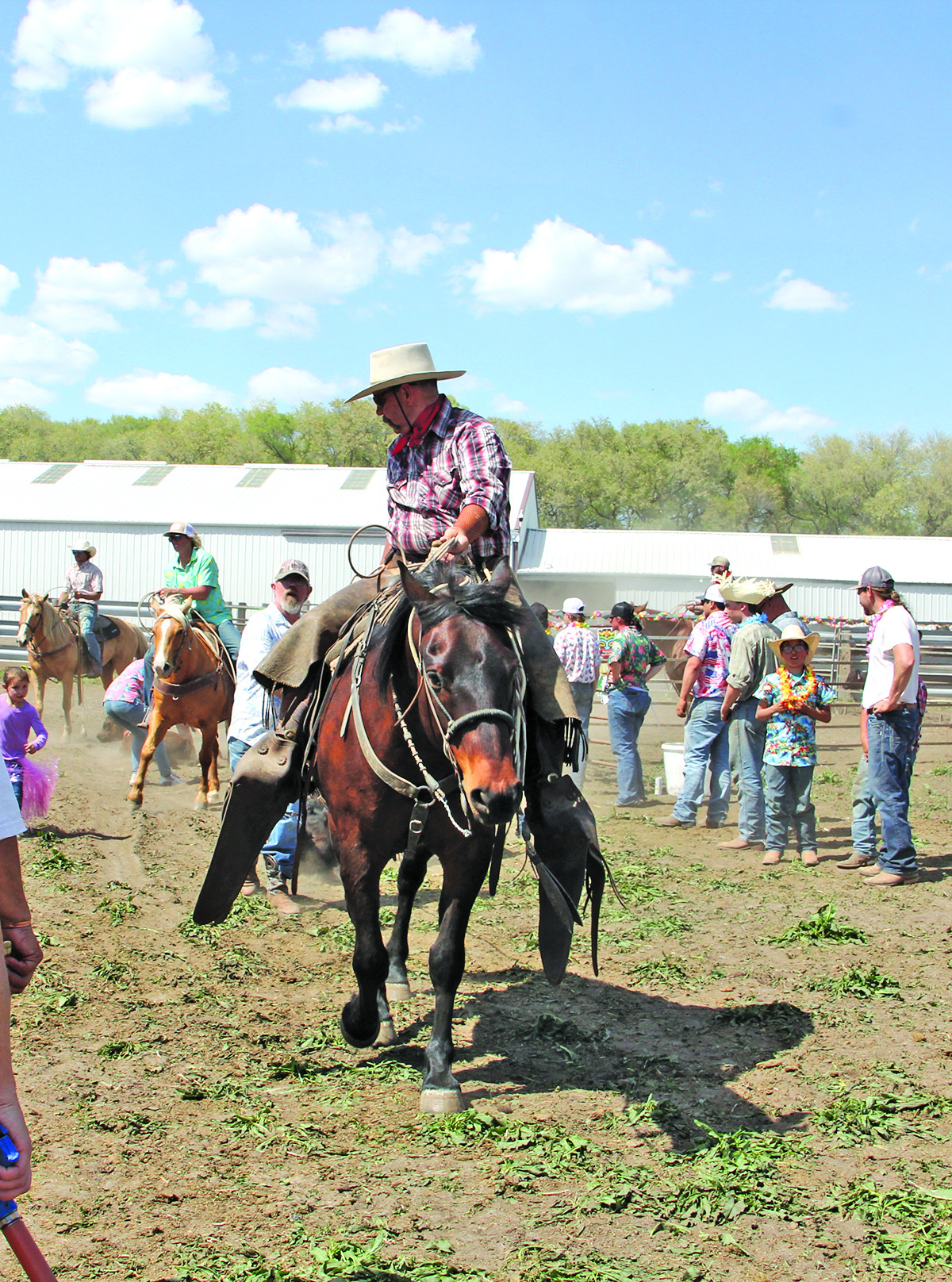
Photo By Chris Docter
By Chris Docter
Branding cattle to denote ownership is an ancient practice. Branding of livestock was depicted on the walls of ancient Egyptian tombs as far back as 2,700 B.C. While most areas of livestock management have advanced, the practice of hot branding has stayed the same throughout history. An iron forged in a personalized shape is heated in a fire until it is glowing red, then it is held to the hide of a cow, horse, or other livestock until the skin is burned and a permanent scar is created. Once an animal wears a brand it will always be able to be identified and returned to it’s rightful owner.
This practice was useful when early ranches had no fences and huge herds of cattle roamed together only to be sorted into bands by owner twice a year: once for spring branding and once for fall weaning/shipping.
Even though most cattle herds are now separated by fences, it is still just as important for cattle to have a “return address.”
Being that there are around 3 million head of cattle in the state of South Dakota, clear ownership is very important. Fences break and cattle theft is still a very real occurrence. While there are other options such as ear tags, there is nothing as permanent and secure as a brand to ensure that wayward livestock can be returned to the proper owner.
Over time, spring branding season in South Dakota has evolved from hard, dirty work, into hard, dirty work that also includes companionship and celebration. It is a way to mark the end of a harsh winter and enjoy some time with family and friends before the all consuming summer farming season hits full force.
In Martin, weekends throughout May and on into June are host to brandings. Whether the individual dates and times are announced on social media or simply travel through word of mouth, it can be guaranteed that neighbors will all come together to help with the full day’s work.
Branding day usually starts with gathering the cattle and sorting the calves off so they can be worked. Some ranches have permanent corrals for their branding pens and some set up panels for the day. Vaccines will be administered so those need to be readied and knives will need to be sharpened for castration. Most ranches use propane stoves to heat their branding irons, but some ranchers, such as Kevin Vandermay, still heat them the old way, with wood fires. Either way, the supplies need to be available to ensure things run smoothly.
Preparations for the livestock are just a part of what happens before branding. Those who attend any branding in the area can count on a feast afterward. Behind the scenes hours of work goes into making homemade bread, bbq beef, all sorts of sides, and decadent desserts. It all will be ready and waiting for the tired and dusty horde when the day’s work is done.
Once everyone arrives (as many as seventy people attend the events) the first group of calves is brought in and the ropers heel and drag them to a line of enthusiastic flankers. Anyone who is tall and agile enough will stand in line to flank. Usually two to a calf, the flankers will finish knocking the calf down and hold it steady while vaccines are given and steers are castrated. Then comes time for the designated branding man to swoop in and leave the mark. This is usually the ranch owner or someone he specifically designates for the job.
Smoke and the smell of burnt hair fills the air and the calf is released, singed and indignant, to find it’s mother and cry to her about it, hoping to be comforted with a drink.
At times there are three or four ropers dragging calves at once. Flankers are running along hand on rope ready for their moment to practice their wrestling skills. People are rushing about with sharp needles and red hot irons. The hustle and bustle of branding day is contagious.
But, here, it isn’t all serious and about the work. For one thing, Martin’s brandings are a family affair. In fact, it isn’t uncommon to see three or four generations all helping out. For instance, Nate Livermont had three generations at his branding this year and there were four at the Scherer branding. Laughing and squealing can be heard from the young children who are helping with small jobs like marking calves. When they aren’t helping they are running and playing and enjoying the freedom that this lifestyle brings.
Once the top of the branding iron stove is nice and hot, it doubles as a cook stove for the freshly procured rocky mountain oysters. At least one person will be handed tongs and risk burnt arm hair to make sure the masses have a quick snack as they refill syringes, get back in line to flank, or just stop to survey the chaos.
There are inevitably coolers full to the brim with every flavor gatorade and multiple beer options to wash down the roasted nuts down.
Usually there is a break between groups of calves where people covered in dust and calve manure stop long enough to step back, take a breath, and chat about the latest news.
This year, branding season was marked by harsh winds and cold rain. More often than not people sought refuge from the wind on midday breaks, guzzling coffee, along with homemade rolls and donuts before steeling themselves for the second part of the day.
With the crowd of helpers the work moves along and even with hundreds of calves to brand progress can be seen. As the number of calves left to be branded dwindles, wives, mothers, and grandmothers notably disappear. They head to the kitchen and begin laying out all of the previously prepared feast.
When the last calf is branded, gates are opened and the herd is pushed back out to pasture. Horses are loaded or tied to their trailers, thankful to cock a leg and nap while their riders head the main meal.
While the crew is tired, they are still jovial. Laughter fills the air while they fill their plates. Finally seated they dive into the food and eat and drink with abandon. Stories of fighting the winter’s harsh weather are told. Calving advice and roping tips are shared. People who may not have seen each other since the year before catch up on all of details that snow and ice had hidden. The ruckus only dies down once bellies are full and food comas sneak in.
Slowly people begin to leave, iconically Midwestern style.
“Whelp,” says someone as they stand, “I gotta get home to do chores.”
“Yeah, me too,” says the person next to them.
Several strides later they stop at another group of people, to chat about how the branding the week before went, and whether or not they are going to head to the branding the next day.
A woman holds a child, fast asleep, exhausted from the day’s events, and chats with a fellow ranch wife about the upcoming gardening season and the results of last year’s canning season.
Again, they excuse themselves and walk on, just to be stopped to chat about the weather, how it is affecting the upcoming growing season.
An hour or so later they manage to stumble to their truck, head home, and unsaddle before dark. Chores are done, children are put to bed, and the slumber of hard work and full bellies engulfs them.
Midwestern winters with their blizzards and subzero temperatures makes gatherings like these impossible. Spring brandings offer the chance to get reacquainted with your neighbors. Historically, the act of branding livestock has been necessary. Over time branding in the Midwest has evolved to combine the unavoidable hard work with companionship and celebration.
While the world around us advances at a frightening pace, the tradition of branding doesn’t seem to be dying out. As long as people eat beef, they will need ranchers. As long as there are ranchers they will need a fool proof way to identify their cattle. Branding has filled this niche for centuries. Here in Martin the tradition is a quintessential part of life and is sure continue for generations to come.